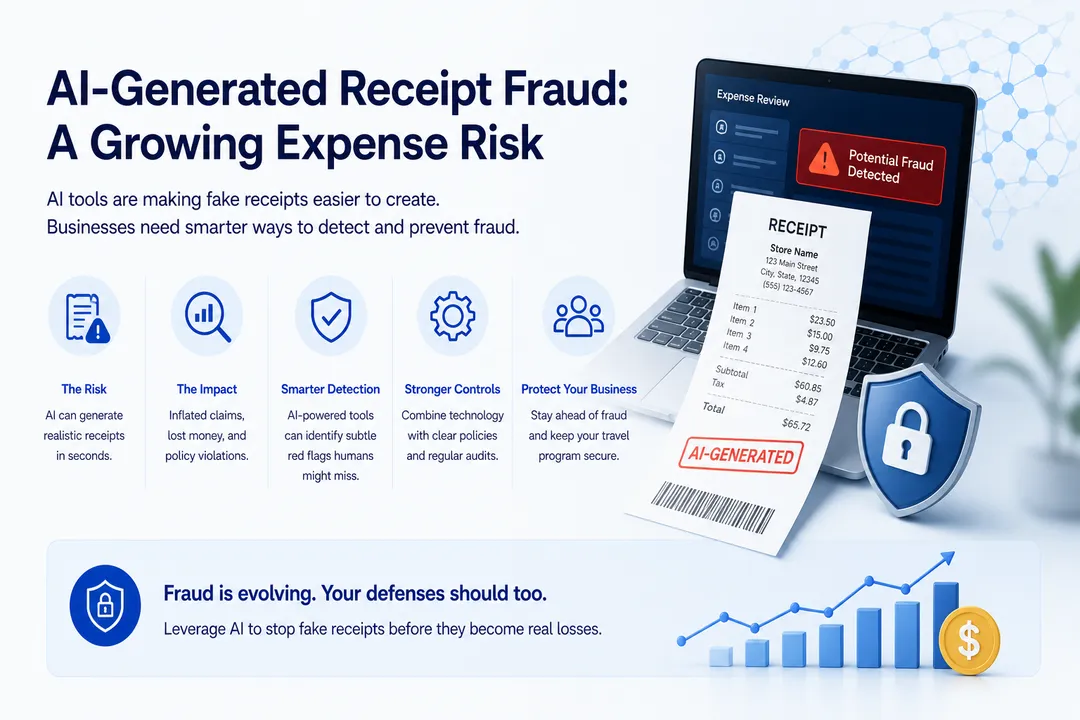
AI tools are making it easier to create fake receipts, raising new concerns for companies managing corporate travel expenses.
As artificial intelligence becomes more accessible, a new challenge is starting to surface in business travel: AI-generated expense fraud.
What once required manual editing can now be done in seconds—producing receipts that look legitimate at first glance.
A New Type of Expense Risk
Expense fraud isn’t new—but AI is changing how it happens.
Modern tools can generate receipts that closely match real vendors, formats, and tax structures. According to insights from SAP Concur and travel expense platforms, companies are already seeing a rise in more advanced, AI-assisted claims.
Why It’s Harder to Detect
AI-generated receipts are not just fake—they’re convincingly accurate.
They can include:
- Realistic logos and branding
- Correct formatting and totals
- Matching locations and timestamps
- Clean, high-resolution output
This removes many of the traditional red flags finance teams rely on.
Where Companies Are Feeling the Impact
The risk is especially visible in:
- Manual review processes
- High-volume travel programs
- Decentralized teams with inconsistent controls
In these environments, speed often outweighs verification—making it easier for fraudulent claims to slip through.
Thinking About How This Affects Your Travel Program?
As expense processes become more complex, it’s becoming increasingly important to understand where risks exist. Triptallia can help you review your current approach and identify areas where controls and visibility can be improved—so you can explore better ways to manage travel expenses.
How Companies Are Responding
To keep up, businesses are starting to shift toward:
- Automated expense auditing tools
- AI-based anomaly detection
- Stronger travel and expense policies
- More structured approval workflows
The focus is no longer just on processing expenses—but on validating them more intelligently.
📰 AI-Generated Receipt Fraud Is Emerging as a New Risk in Business Travel
AI tools are making it easier to create fake receipts, raising new concerns for companies managing corporate travel expenses.
As artificial intelligence becomes more accessible, a new challenge is starting to surface in business travel: AI-generated expense fraud.
What once required manual editing can now be done in seconds—producing receipts that look legitimate at first glance.
A New Type of Expense Risk
Expense fraud isn’t new—but AI is changing how it happens.
Modern tools can generate receipts that closely match real vendors, formats, and tax structures. According to insights from SAP Concur and travel expense platforms, companies are already seeing a rise in more advanced, AI-assisted claims.
Why It’s Harder to Detect
AI-generated receipts are not just fake—they’re convincingly accurate.
They can include:
- Realistic logos and branding
- Correct formatting and totals
- Matching locations and timestamps
- Clean, high-resolution output
This removes many of the traditional red flags finance teams rely on.
Where Companies Are Feeling the Impact
The risk is especially visible in:
- Manual review processes
- High-volume travel programs
- Decentralized teams with inconsistent controls
In these environments, speed often outweighs verification—making it easier for fraudulent claims to slip through.
Thinking About How This Affects Your Travel Program?
As expense processes become more complex, it’s becoming increasingly important to understand where risks exist. Triptallia can help you review your current approach and identify areas where controls and visibility can be improved—so you can explore better ways to manage travel expenses.
How Companies Are Responding
To keep up, businesses are starting to shift toward:
- Automated expense auditing tools
- AI-based anomaly detection
- Stronger travel and expense policies
- More structured approval workflows
The focus is no longer just on processing expenses—but on validating them more intelligently.
What This Means Going Forward
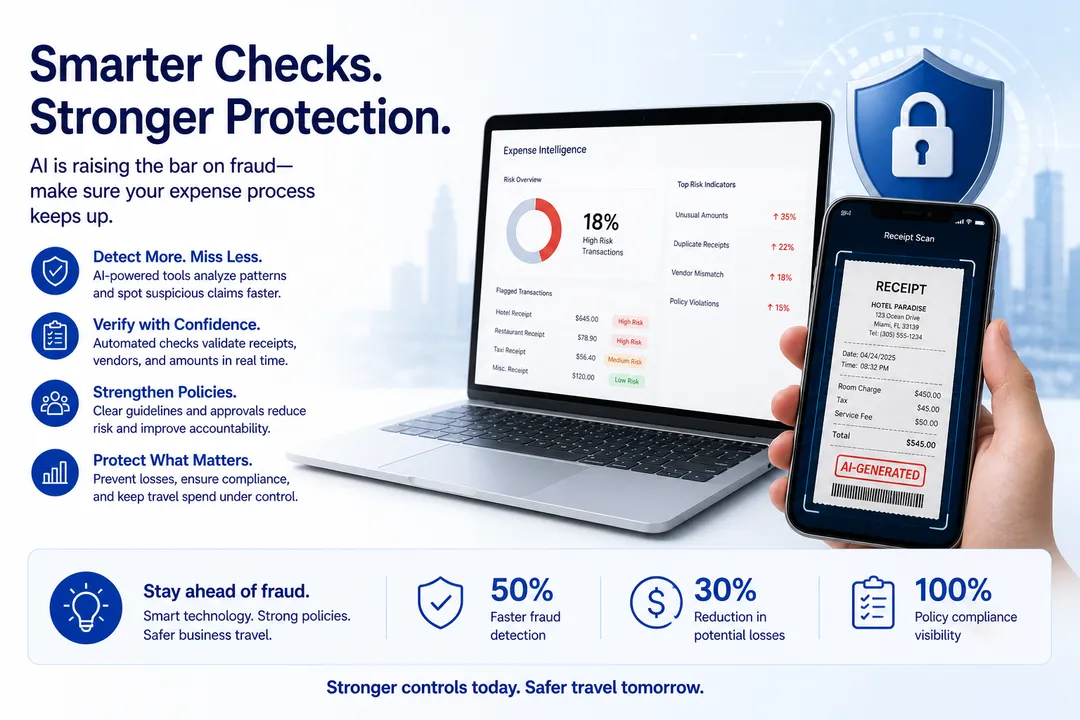
AI is raising the bar on both sides.
While it creates new risks, it’s also pushing companies to adopt smarter systems and tighter controls. The result is a shift toward more data-driven, automated expense management.
Final Thoughts
AI-generated receipt fraud is still emerging—but it’s evolving quickly.
Companies that rely only on manual checks may find it harder to keep up. Those that combine clear policies with smarter verification methods will be better positioned to manage risk.
One Last Thought
If you’re reviewing how your travel expenses are managed, it may help to take a step back and reassess your current process. Triptallia can share practical recommendations tailored to your setup—so you can evaluate your options with a clearer perspective.