Corporate travel decisions are increasingly influenced by sustainability goals, as companies face growing pressure to track and reduce emissions.
Business travel is no longer just about cost and convenience. For many organizations, it’s now tied directly to ESG targets and carbon reporting—especially Scope 3 emissions.
Travel Is Now Part of Emissions Reporting
For many companies, business travel is one of the largest contributors to indirect emissions.
As a result, organizations are being asked to:
- Track travel-related carbon output
- Report emissions transparently
- Justify travel decisions more carefully
Companies Are Rethinking Travel Choices
This shift is already changing behavior.
Travel managers are starting to:
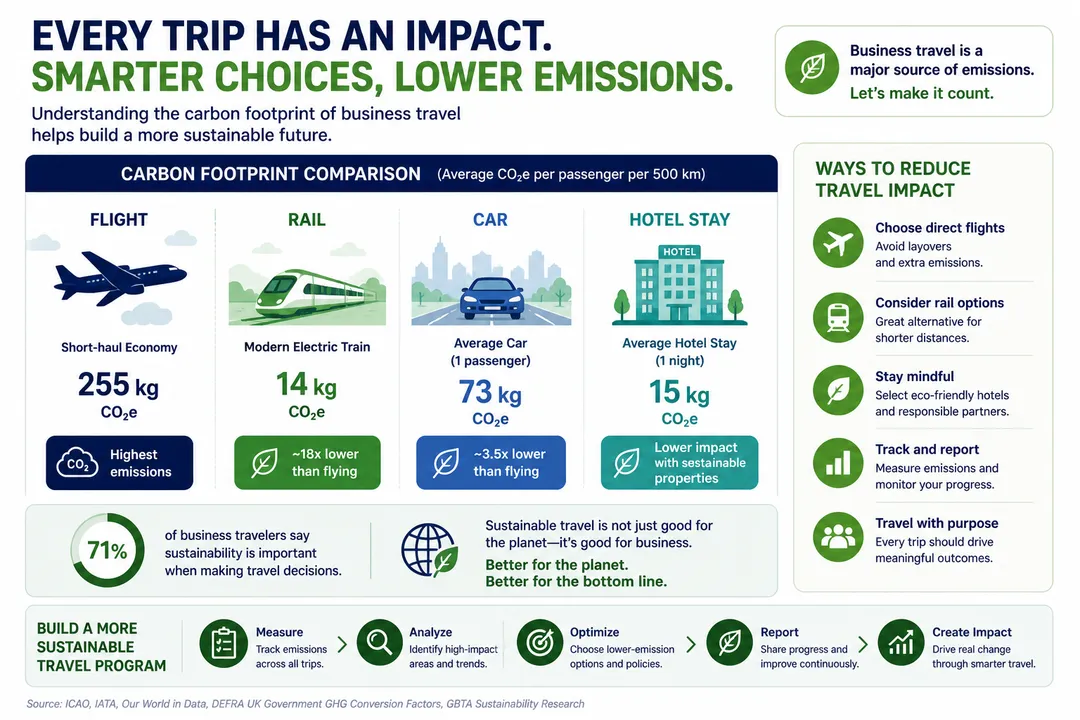
- Choose lower-emission routes and airlines
- Prioritize direct flights over multi-leg journeys
- Consider rail alternatives where possible
- Reduce unnecessary trips
The focus is shifting from “how often we travel” to “whether the trip is justified.”
Data Is Becoming Central to Travel Decisions
To meet reporting requirements, companies need better visibility.
That means:
- Tracking emissions per trip
- Comparing travel options based on impact
- Integrating sustainability into travel policies
Without clear data, it becomes difficult to make informed decisions—or demonstrate progress.
Rethinking Travel with Sustainability in Mind
As reporting requirements increase, having visibility into your travel impact becomes essential. Triptallia can help you better understand your travel patterns and explore more efficient, lower-impact options—so you can make informed decisions without adding complexity.
A Shift Toward Smarter Travel Policies
Sustainability is also influencing policy design.
Companies are introducing:
- Emission-based travel guidelines
- Approval processes for high-impact trips
- Incentives for lower-carbon options
This is creating a more structured approach to business travel.
What This Means Going Forward
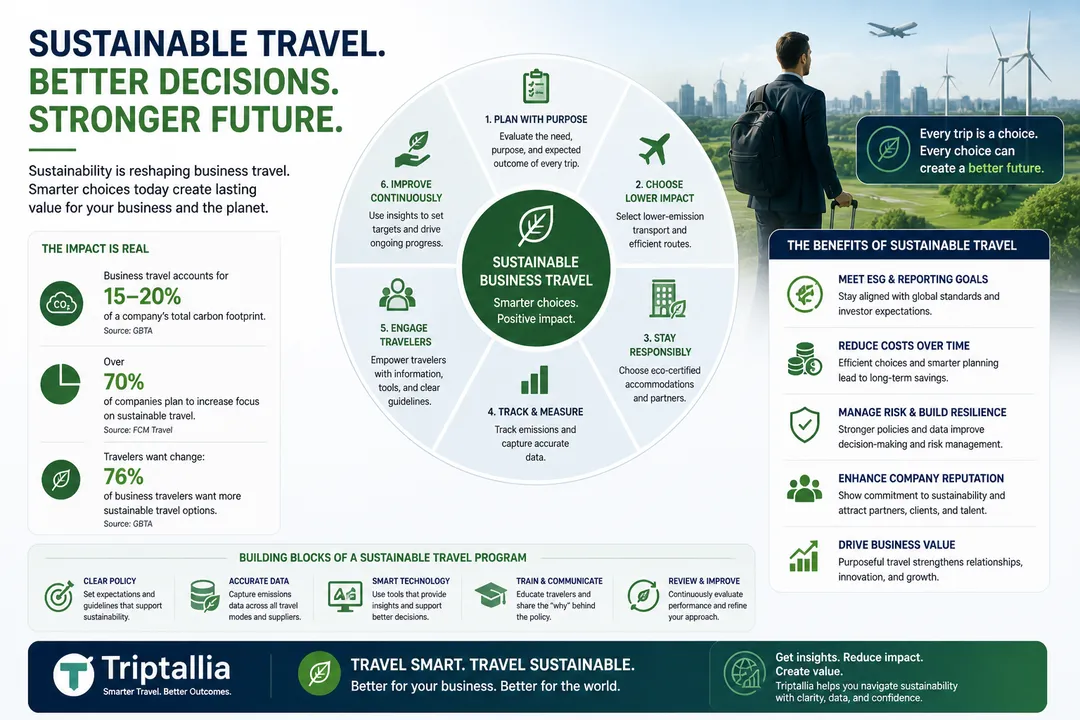
Sustainability is no longer a “nice to have”—it’s becoming part of how business travel is measured and managed.
Organizations that adapt early will be better positioned to:
- Meet reporting requirements
- Control long-term costs
- Align travel with broader business goals
Final Thoughts
Business travel is evolving.
It’s no longer just about getting from one place to another—it’s about making decisions that balance cost, impact, and purpose.
One Last Thought
If sustainability is becoming part of your travel planning, it may be worth understanding how your current approach aligns with these expectations. Triptallia can share tailored insights based on your travel activity—so you can explore more balanced and informed options.