Ongoing geopolitical tensions in the Middle East are starting to impact business travel demand, flight routes, and operational costs across global travel programs.
As instability in the region continues, airlines and travel providers are adjusting routes, schedules, and pricing—creating ripple effects for corporate travel.
For companies with international operations, especially across Europe, Asia, and the Middle East, the impact is becoming harder to ignore.
Flight Routes and Costs Are Being Affected
Airlines are already adapting to the situation.
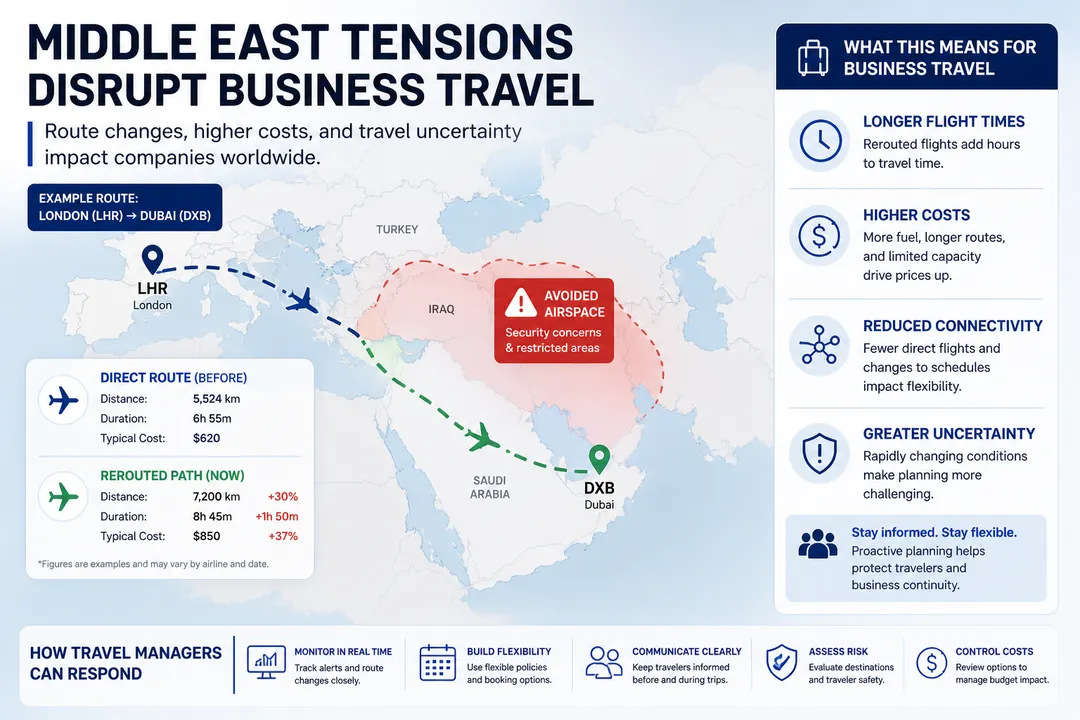
In some cases, routes are being adjusted or extended to avoid affected airspace, leading to:
- Longer flight times
- Higher fuel consumption
- Increased ticket prices
According to reports from The Wall Street Journal, travel demand across certain routes has weakened, with companies becoming more cautious about travel in or near affected areas.
Business Travel Demand Is Becoming More Selective
Companies are not stopping travel—but they are becoming more careful.
Travel managers are:
- Reassessing non-essential trips
- Monitoring risk levels more closely
- Adjusting travel policies in real time
This is especially true for companies operating in or near the region, where risk management is now part of everyday travel planning.
Keeping Travel Plans Flexible
With uncertainty in the region, flexibility has become critical.
Organizations are prioritizing:
- Flexible booking options
- Real-time itinerary adjustments
- Clear communication with travelers
In fast-changing environments, the ability to adapt quickly can significantly reduce disruption.
Thinking About How This Affects Your Travel Planning?
When travel conditions shift quickly, having a clear view of your options becomes essential. Triptallia can help you assess routes, timing, and alternatives—so you can make informed decisions without unnecessary complexity.
Operational Pressure Is Increasing
Beyond routes and demand, the situation is also affecting operational costs.
Some governments and aviation authorities have introduced temporary measures—such as allowing airlines to adjust schedules or reduce certain services to manage fuel and capacity challenges.
This creates a more unpredictable environment for business travel planning.
What This Means for Corporate Travel
The current situation highlights a broader shift:
Business travel is no longer just about logistics—it’s about adaptability and risk awareness.
Companies that can respond quickly to changing conditions are better positioned to:
- Control costs
- Protect travelers
- Maintain operational continuity
Final Thoughts
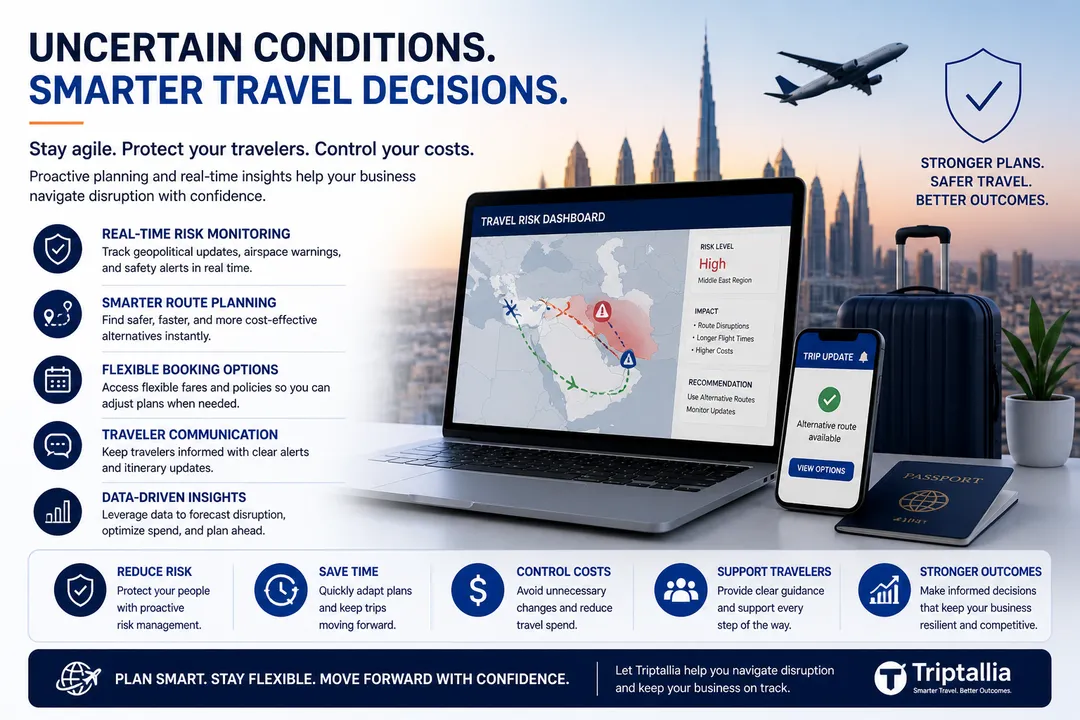
The Middle East situation is a reminder that external factors can quickly reshape travel conditions.
While demand remains, the way companies approach travel is evolving—toward more flexibility, better planning, and stronger oversight.
One Last Thought
If your business relies on international travel, it may be worth reviewing how adaptable your current approach is. Triptallia can share practical options tailored to your routes and travel needs—so you can better navigate changing conditions with confidence.